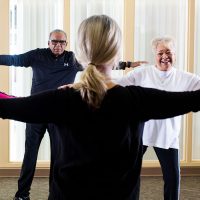
According to the AARP, 85 percent of seniors want to live out their lives at home. However, few options exist for community-based care, especially for those with low incomes and those who live in rural areas.
Our Vision for Frail Elders in Western and Central New York
Decline is deferred and frail elders function successfully within the community with effective health care and supports.
Page contents: Background Challenges Current Projects Results Sources
Background
The Health Foundation for Western and Central New York (formerly the Community Health Foundation for Western and Central New York) is focused on not only improving the quality of care for frail elders in our communities, but also on postponing the onset of frailty and deferring its consequences.
The Foundation's goal is to ensure that elders secure high quality health care; chronic diseases among elders are well managed; caregivers are able to address the needs of elders and more options for community-based care for elders are available and utilized.
To achieve these goals, the Foundation is working to create increased opportunities for people in our communities to remain more independent, increase support for elders living independently and significantly reduce the triggers of decline, such as falls, poor transitions of care and ineffective management of multiple medications.
CODA (Creating Options for Dignified Aging), which grew from one specific initiative in two counties to encompass all of our work in this area, applies four strategies to defer decline and frailty: building an elder competent workforce, slowing the consequences of frailty, strengthening community supports and aligning policy and research with community priorities.
Challenges
Some of the challenges we are facing in our work to improve health and health care for frail elders in western and central New York include:
-
Quality care: The health and long-term care systems in the United States fail to meet the needs of most patients during care transitions. The frail elderly are one group that is particularly vulnerable when care between settings is not provided in a coordinated, seamless manner.1
-
Chronic disease management: Large proportions of older Americans report a variety of chronic health conditions such as hypertension and arthritis. More coordinated, preventive approaches to health care could support the effective management of chronic conditions.2 -
Frailty due to injury: One out of every three people over the age of 65 will fall each year, resulting in loss of independence - in fact, falling is one of the top reasons an individual is moved to institutional care. Many of these falls will occur at or near a person's home and are preventable.3 -
Workforce shortages: The number of trained, professional caregivers is decreasing. There are currently shortages of home care aides and nurses, and a fewer number of younger adults in our region available to enter those careers.4 -
Opportunities to age in place: According to the AARP, 85 percent of seniors want to live out their lives at home. However, few options exist for community-based care, especially for those with low incomes and those who live in in rural areas.
Current Projects Ensuring Livable and Safe Housing and Communities for Elders
The Falls Prevention Initiative engages community-based organizations and health care providers in implementing successful strategies to reduce falls and the impact of falls for older adults who are at risk of losing their ability to live independently in the community.
The Neighborhood Action Initiative provides neighborhood-based organizations with resources that enable them to create and test best practice and evidence-based projects that will help seniors age in place and increase the number of people who are able to remain in their homes and neighborhoods as they grow older.
Improving Quality Through Better Coordination
As part of the Improving Care Transitions Initiative, the Foundation continues to support the development of more effective partnerships between health care providers and caregivers to improve continuity, reduce error and delay and increase patient control of health decisions among frail elders.
Improving Care through Patient and Family Engagement
The Sharing Your Wishes initiative partners with coalitions in 13 counties to increase awareness of the importance of planning in advance for future health care needs. This is particularly important when an older adult experiences an illness or condition that prevents making or communicating decisions.
Workforce Development
The Geriatric Workforce Initiative includes a series of projects aimed to increase recruitment, retention, and competence among physicians, nurse practitioners, physician’s assistants, home health aides, social workers and other health care related professionals who serve frail elders and their families in Western and Central New York.
To help ensure that older adults will be cared for by professionals prepared to provide specialized, high-quality care, the Health Foundation is expanding its efforts to create a more elder-friendly workforce with the Investing in an Elder-Competent Workforce: Strengthening Nursing and Social Work Education initiative.
Results
Some examples of the initial results of these projects include:
-
Creation of useful and experience-based tools: The teams participating in the Falls Prevention initiative have produced a comprehensive how-to manual that includes assessment tools, guidelines for training, exercise programs and home safety checklists. Each of the Quality Improvement Collaboratives on Transitions of Care produced specific tools and templates that are easily transferrable to other settings. -
Promoting collaboration among health care professionals: Learning Collaboratives, which promote learning, the exchange of ideas and skill development among participants, are an ongoing part of the Neighborhood Action Initiative, Sharing Your Wishes, Falls Prevention, Transitions of Care and other larger Foundation programs. -
Increasing knowledge and skills: All the projects we fund provide health care professionals, individuals and families with authoritative and appropriate health care information through presentations, training sessions, events, websites and professional development opportunities.
Sources: 1 National Transitions of Care Coalition: http://www.ntocc.org/Home/PolicyMakers/WWS_PM_Tools.aspx 2 Federal Interagency Forum on Aging-Related Statistics: http://www.agingstats.gov/, http://www.aoa.gov/ 3 CDC Falls Data: http://www.cdc.gov/HomeandRecreationalSafety/falls/adultfalls.html 4 WNY Alliance for Person-Centered Care: http://www.wnyapcc.com/aging.html
Photo credit: Photo of elderly woman with glasses courtesy of Tony Lojacono Photography.
|